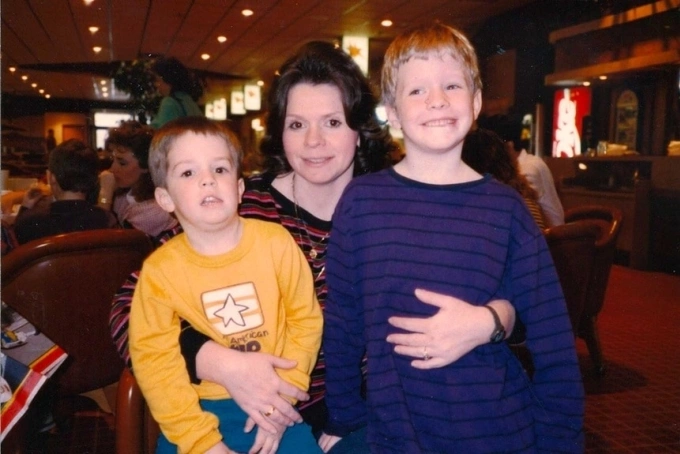


The rape and strangulation of three 16-year-old girls led to the country's biggest manhunt, questioning 35,000 people, but the truth was not revealed until 30 years later.
In the summer of 1973, the city of Swansea and surrounding areas were shaken by two cases of young women who went out at night and failed to return home.
On Saturday night, July 14, 1973, Sandra Newton, 16, went out with her boyfriend, then disappeared while walking 8 km home at 1:00 am on Sunday morning. Police believe the girl tried to hitchhike home.
Sandra's body was found two days later in a drain. She had been raped, beaten over the head and strangled with her own dress.
Two months later, on the morning of Sunday 16 September, the bodies of Geraldine Hughes and Pauline Floyd, both 16, were discovered in woodland. They had hitchhiked home after dancing at the popular Top Rank nightclub in Swansea on Saturday night.
The two best friends were beaten, raped, and their bodies dumped about 11 km from where Sandra was found.

Their deaths sparked the biggest murder investigation in Welsh history. A team of 150 police officers questioned 35,000 people who closely matched the description of the last person seen with Geraldine and Pauline: bushy hair, moustache, male aged between 30 and 35.
Investigators also have clues about the car he was driving. Witnesses saw the girls leave Swansea that night, getting into a light-coloured Morris 1100 driven by a man. But the public waited and waited and no arrests were made.
'Saturday Night Strangler'
Without computers, police face the impossible task of sifting through mountains of paperwork to sift through large numbers of suspects.
The prime suspect in Sandra's death was the last person to see her. It was Sandra's boyfriend, but he maintained his innocence and was never charged.
Despite the similarities, police continued to conduct separate investigations into Sandra's death and the murders of Geraldine and Pauline – almost 30 years later.

The two investigations were linked in the early 2000s when South Wales Police began reopening unsolved cases in the hope that DNA could bring the killers to justice.
First, semen stains on Geraldine and Pauline's clothes were isolated to prove they belonged to the same man, but that man was not included in the recently built DNA database.
A year later, tests on Sandra's underwear gave police their first big break: DNA from an unidentified man. Forensic scientist Colin Dark identified him as Geraldine and Pauline's killer.
“This is really shocking news because it means there was a serial killer operating in south Wales in 1973,” said Dr Colin Dark. For the first time in nearly 30 years, authorities know that the same man killed all three girls. He was nicknamed the “Saturday Night Strangler” because of the timing of the murders.
This breakthrough also proves that Sandra's boyfriend at the time of her death was completely innocent.
DNA analysis method makes history
With no DNA matches in the national database, the killer's identity remains a mystery. But scientists have come up with another pioneering way to use DNA to catch the killer.
“You inherit DNA from your parents and pass your DNA on to your children. So can we search for the children of criminals in a DNA database? Absolutely,” said Dr. Colin Dark.
After sifting through thousands of DNA profiles from men in the South Wales area, Dr Dark’s team narrowed down the names to about 100. All of them were a half match to the offender’s DNA profile, so were likely to be his children.
According to Dr Dark, this is a groundbreaking technique, “a first in the UK and possibly the world”, from which a new investigative tool called familial DNA analysis has been developed.
Meanwhile, police meticulously narrowed a list of 35,000 suspects to 500 key suspects. The shortlist was based on physical description, whether they owned a 1100, and whether they had a history of violence or sexual offenses.
After comparing both lists, the “Kappen” family lineage caught the eye.
Local car thief Paul Kappen's DNA was on a database after committing crimes in and around Port Talbot, but he was just seven years old at the time of the murder.
However, Paul’s father, Joseph Kappen, was questioned in 1973 because he matched the suspect’s features and drove a light-colored Morris 1100. That same year, police visited Joseph, a nightclub bouncer and part-time bus driver. But he had an alibi provided by his wife, claiming that his car had broken down on the night of the murder.
People around commented that Joseph was a thug, had a history of domestic violence and had been to prison many times.
Now, with Paul’s DNA matching 50% to the killer’s, Joseph became the prime suspect. But when authorities went to Joseph’s home to take a DNA sample, they learned that he had died of lung cancer 11 years earlier, in 1990, at the age of 48.
Excavating the grave to find the culprit
In order to have a complete record of the murder, the police decided to apply for permission to exhume Joseph’s body. The then Home Secretary, Lord Blunkett, approved, stressing that the aim was to find the truth “once and for all” and bring comfort to the victim’s family. It was the first time a suspect had been exhumed in the UK to prove guilt.
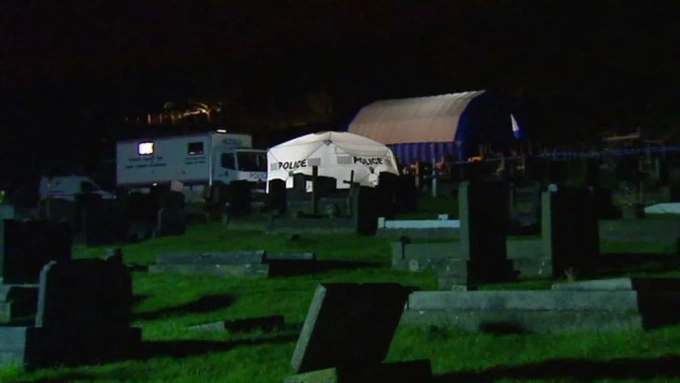
In May 2002, the exhumation began at midnight. Forensic DNA testing proved that Joseph was the killer of all three girls, after nearly three decades of searching.

“Words cannot describe how we felt at that moment, it was pure relief. None of us ever stopped hoping that one day we would find out who he was,” Geraldine’s family said.
“You know there are bad things out there, but you never believe they will touch you and your family. When that happens, it’s a life sentence to hell. Now we can close that hell forever,” mother Geraldine shared with The Guardian after her daughter's case was resolved in 2003.
South Wales Police's hunt for the "Saturday Night Strangler" was one of the biggest investigations in the country's history and reshaped the way forensic science uses DNA to solve long-standing murder cases around the world.